Best Time to Visit Korea 2026: Month-by-Month Guide
Choosing the best time to visit Korea comes down to one question: what do you want to see? Korea has four sharply distinct seasons, and the same city feels like a different country in April versus August. This month-by-month guide breaks down the weather, crowds, prices, and festivals so you can match your trip to cherry blossoms, fall foliage, snow, or the best value — and skip the seasons that would ruin it.
The Best Time to Visit Korea by Season
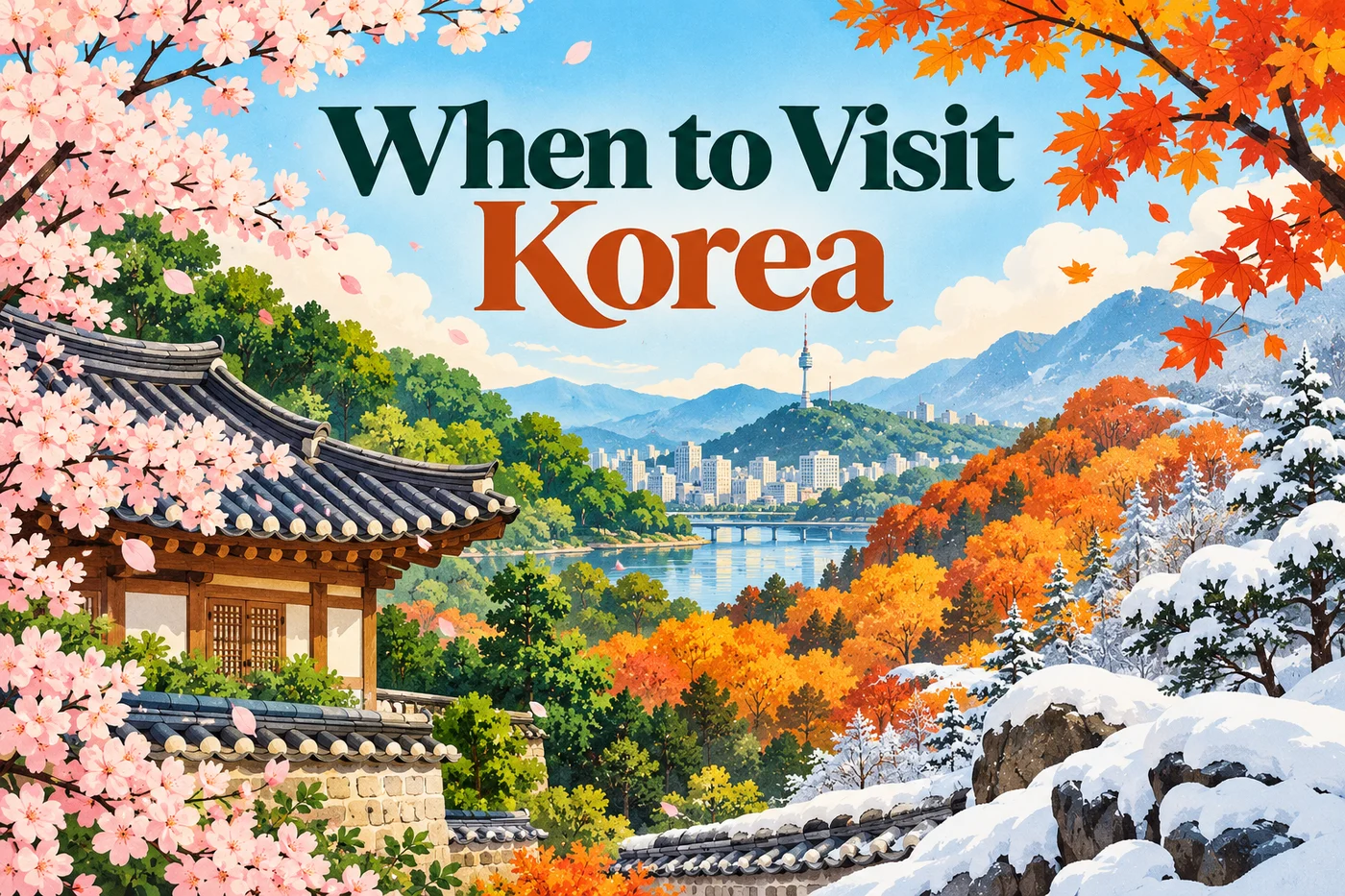
Korea's two peak seasons are spring and autumn, when the weather is mildest and the scenery is at its most spectacular. Summer and winter are second-best, rewarding travelers with specific goals (beaches or skiing) and lower crowds. Here's the high-level picture before we go month by month.
| Season | Months | Weather | Best For |
|---|---|---|---|
| Spring | March–May | Mild, 8–20°C, dry | Cherry blossoms, comfortable sightseeing |
| Summer | June–August | Hot & humid, monsoon in July | Beaches, festivals, budget early/late |
| Autumn | September–November | Crisp, 10–22°C, clear skies | Fall foliage, hiking, festivals |
| Winter | December–February | Cold & dry, snow, down to −10°C | Skiing, fewest crowds, lowest prices |
The one-line verdict: For most first-time visitors, late April–May (spring) and September–November (autumn) deliver the best balance of weather, light, and walkability. Spring for blossoms, autumn for foliage.
Korea Month-by-Month: What to Expect
If you already have travel dates, this table tells you exactly what you're walking into — weather, crowds, and the headline reason to go (or not).
| Month | Vibe | Why Go / Watch Out |
|---|---|---|
| January | Coldest, festive | Ski season peaks in Gangwon-do; budget-friendly, fewest crowds |
| February | Cold, quiet | Still ski season; low prices (except Lunar New Year) |
| March | Thawing | First blossoms in the south late month; some yellow dust |
| April | Vibrant, busy | Cherry blossom peak (~mid-April in Seoul); book months ahead |
| May | Lush, flawless | Often the best overall month; great weather, lantern festivals |
| June | Warm, breezy | Last comfortable month before monsoon; fewer crowds |
| July | Wet, hot | Monsoon (jangma) peaks; skip unless beach-bound |
| August | Hot, energetic | Beach season for Busan & Jeju; intense heat and humidity |
| September | Comfortable returns | Crowds fade, warm seas; plan around Chuseok holiday |
| October | Peak autumn | Best foliage & hiking weather; book early, trails fill fast |
| November | Crisp, shoulder | Late foliage in the south; crowds thin, good value |
| December | Full winter | Ski lifts open, festive lights; cold but magical |
Best Time for Cherry Blossoms (Spring)
Cherry blossom season is Korea's most famous natural event. The general window is late March to mid-April, with the Seoul peak typically arriving around mid-April. Blossoms open first in the warmer southern regions and move northward, so timing depends on both the year and where you go.
Beyond the blossoms, spring brings mild 10–20°C temperatures, low humidity, and long daylight — genuinely comfortable for walking and hiking. The trade-off is crowds and price: famous blossom spots like Seoul's Yeouido Park draw hundreds of thousands of visitors, and accommodation books out fast.
Heads-up: Spring also brings occasional yellow dust (hwangsa) blown in from the mainland. If you have respiratory sensitivities, pack a mask and check air-quality apps. Cherry blossom timing shifts yearly — check the Korea Tourism Organization forecast closer to your dates.
Best Time for Fall Foliage (Autumn)
If spring is Korea's prettiest season, autumn is its most dramatic. From mid-October through early November, the mountains and parks turn vivid red, orange, and gold. October temperatures (15–22°C) are arguably the most comfortable of the entire year — warm enough to explore without a jacket, cool enough to enjoy long walks, with crisp, clear air.
For the best foliage, head to Bukhansan National Park (entirely within Seoul), or Seoraksan National Park in Gangwon Province, about three hours from Seoul, which offers some of the most breathtaking autumn scenery in Northeast Asia. Like spring, autumn is peak season, so book trails and rooms early.
Best Time for Budget Travelers and Avoiding Crowds
If your priority is value rather than perfect weather, the calculus flips. The cold keeps casual tourists away, so flights and hotels drop sharply in deep winter and late autumn.
- Cheapest months: January to early March and November (post-foliage) bring the lowest flight and hotel prices — except around Lunar New Year (Seollal).
- Fewest crowds: June (before the monsoon) and early December let you explore palaces and temples with breathing room.
- Best shoulder value: Late February to March balances thawing weather with off-peak prices.
Winter is also prime shopping season — the underground malls of Myeongdong and Gangnam are warm refuges. If you plan to shop heavily, make sure you know how to reclaim the 10% VAT before you leave; see our Korea tax refund guide for tourists for the full process.
When to Visit Korea by Region
Korea isn't climatically uniform — the south warms first and the eastern mountains get the most snow. A few regional notes:
- Seoul: Best in spring and autumn. Cherry blossoms in city parks, foliage at Bukhansan and Namsan.
- Busan: Spring and autumn for mild weather, but summer shines here — it's the country's top beach destination in July–August.
- Jeju Island: Subtropical and warmest; spring arrives by late March. Beautiful but vulnerable to late-summer typhoons.
- Gangwon-do: The winter sports capital (December–February) and a top autumn foliage region.
Don't Forget: Entry Rules Before You Book
Whenever you decide to go, check Korea's entry requirements first — they changed in 2026 and change again in 2027. Most visa-free travelers currently skip the K-ETA but must submit a free e-Arrival Card before arrival. Read our Korea K-ETA & e-Arrival Card guide so your paperwork is sorted before you book flights.
Conclusion: Pick Your Season, Then Your Month
There's no single best time to visit Korea — only the best time for what you want. Quick recap:
- Cherry blossoms: Late March to mid-April (Seoul peaks ~mid-April).
- Best overall weather: May and October — mild, dry, comfortable.
- Fall foliage: Mid-October to early November.
- Beaches: July–August (Busan, Jeju).
- Skiing & budget: January–February in Gangwon-do.
- Avoid: July monsoon, unless you're staying on southern beaches.
Match the season to your priorities, lock in your dates early for spring and autumn, and Korea will reward you with one of the most rewarding trips in Asia — whatever the calendar says.
Frequently Asked Questions
What is the overall best time to visit Korea?
Late April to early May and mid-to-late October are the sweet spots. They offer the most balanced combination of mild weather (10–22°C), beautiful scenery (blossoms or foliage), clear skies, and full tourist infrastructure.
When is cherry blossom season in Korea?
Cherry blossoms generally bloom from late March to mid-April, with the Seoul peak around mid-April. They open first in southern regions and move north, so exact timing varies by year and location.
When is the best time for fall foliage?
Mid-October through early November is peak fall foliage, with October offering the most comfortable temperatures of the year (15–22°C). Bukhansan in Seoul and Seoraksan in Gangwon Province are top spots.
What is the worst time to visit Korea?
July is the wettest month, peak of the monsoon season (jangma), and August is intensely hot and humid. Skip these unless you're specifically after beach time in Busan or Jeju.
When is the cheapest time to visit Korea?
January to early March and November (after the autumn peak) bring the lowest flight and hotel prices, since cold weather keeps casual tourists away. Avoid the Lunar New Year holiday, when domestic travel spikes.
Is winter a good time to visit Korea?
Yes, if you want skiing, festive lights, fewest crowds, and the lowest prices. Gangwon-do has world-class ski resorts from December to February. Just pack serious cold-weather gear, as temperatures can drop to −10°C.
Comments
Post a Comment