Price note: Unless explicitly identified as an officially checked fare, amounts below are planning estimates retained from the archive. They are not live quotes. Confirm the final price for your date, branch and party size.
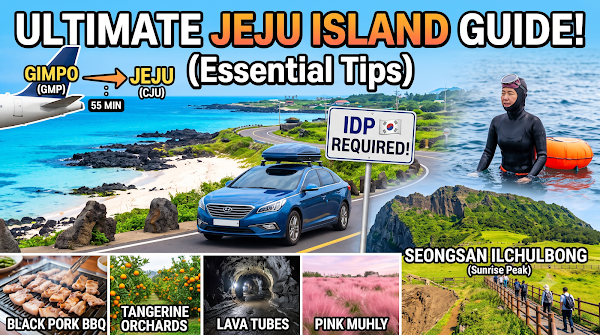
⚡ Quick answer
- Getting there: compare flights from Seoul Gimpo (GMP) or your other departure airport to Jeju (CJU). Check the airport code on both tickets when connecting from an international arrival.
- A car makes a multi-stop itinerary easier, but buses, taxis and guided tours are alternatives. Plan fewer stops when using public transport.
- Before renting, confirm the accepted driving documents, licence class, minimum age, driving experience and insurance with the rental company. Arrange any required International Driving Permit before departure.
- How long: three days minimum, four to five ideal. Don't try to day-trip it from Seoul.
- Don't miss: Seongsan Ilchulbong sunrise peak, Manjanggul lava tube, Hallasan (Korea's highest mountain), and black pork BBQ.
- Best season: autumn (Sep–Nov) for pink muhly grass and tangerines; spring for canola flowers.
Jeju Island is where Koreans go when they want to feel like they've left the country without the passport stamp — a volcanic island an hour south of the mainland, with black lava beaches, tangerine orchards, a 1,950-meter mountain in the middle, and a food and dialect distinct from anywhere else in Korea. Locals call it their Hawaii, and there are more flights from Seoul to Jeju than on almost any domestic route in the world.
Plan Jeju around a few regions rather than trying to circle the island every day. Flights, rental prices, entry requirements and attraction access need checks for your travel dates.
Why Jeju Is Worth the Extra Flight
Jeju offers volcanic landscapes, coastal trails, lava formations and island food that make a very different trip from Seoul. Its UNESCO-recognised natural heritage is a reason to slow down and explore.
What that translates to on the ground: a dormant volcano you can hike, lava tubes you can walk through, waterfalls that drop straight into the sea, hexagonal basalt cliffs, and the haenyeo — the free-diving women, many in their 60s and 70s, who still harvest seafood by hand and are themselves a UNESCO-recognized cultural treasure. It's scenery Seoul and Busan simply can't offer.
How to Get to Jeju
For essentially every visitor, Jeju is a flight, not a ferry. And here is the single most important thing to know before you book:
Gimpo is a common departure point for Seoul–Jeju flights. An international arrival at Incheon may involve a transfer between airports; do not assume a same-airport connection exists. Check the actual airline schedule and allow time for immigration, baggage and check-in.
| Route | Time | Fare (one way) | Notes |
|---|---|---|---|
| Seoul Gimpo → Jeju | 55–70 min | ₩40,000–80,000 (LCC) | The standard route; departures all day long |
| Busan Gimhae → Jeju | ~1 hour | ₩40,000–80,000 | Easy add-on if Busan is already on your route |
| Ferry (Mokpo/Wando → Jeju) | 1–4.5 hours | ₩30,000–80,000 | Only if you're already in the south or bringing a car |
Compare airlines using the final fare with luggage and change conditions. Flight frequency, promotional prices and the cheapest booking window vary; the previous claim about one airline operating 139 daily flights was not substantiated.
For a ferry journey, verify the operating port, sailing date, vehicle rules and weather notices directly with the ferry company. Do not build a connection around an old route listing.
Do you need a visa for Jeju?
Entry eligibility depends on nationality, passport, route and purpose. Direct-to-Jeju arrangements should not be assumed to apply to an arrival through mainland Korea. Check Immigration and our entry guide.
The Car Question: Read This Before You Go
This is the detail that shapes your whole trip, and the one most likely to go wrong.
Rental requirements vary by licence and company. Ask the operator to confirm the exact documents and vehicle class before paying, including whether an accepted International Driving Permit is needed alongside your original licence and passport. Check insurance exclusions and excess separately.
Attractions are spread across the island. A rental car can be convenient, while a bus-based trip works better with one region per day and accommodation close to useful routes.
Your realistic options:
| Option | Cost | Best for |
|---|---|---|
| Rental car | Live quote needed, including insurance and fuel | Flexible multi-stop routes; confirm driving eligibility |
| Private driver / guided tour | Higher, per day | Non-drivers, or anyone who wants zero logistics. Common on Jeju. |
| Public buses | ₩1,200–3,000/ride (T-money) | Budget travelers with patience and light plans |
| Taxis / ride apps | Metered | Short hops within Jeju City or Seogwipo |
Non-drivers can combine local buses with selected taxi rides or book a tour. Compare pickup areas and return times before choosing accommodation.
Where to Base Yourself
Jeju splits roughly into north (Jeju City), south (Seogwipo), east (Seongsan), and west (Aewol). Most visitors base in one or two of these rather than moving every night.
| Area | Character | Best for |
|---|---|---|
| Jeju City (north) | Where you land; markets, restaurants, budget lodging, nightlife | First night, food, convenience |
| Seogwipo (south) | Harbor town, waterfalls, quieter and scenic | The classic second base; most attractions in reach |
| Seongsan (east) | Guesthouses under the sunrise crater | Catching Seongsan Ilchulbong at dawn |
| Jungmun (south resort) | Resort strip, beaches, big hotels | Families, beach days, luxury |
| Aewol (west coast) | Instagram cafes, coastal drives, pensions | Couples, cafe-hoppers, slower pace |
A simple, effective plan for three days: first night in Jeju City, then move to Seogwipo for the rest, using it as a hub for the south and east. It cuts down on repacking and puts you near most of the headline sights.
The Essential Attractions
Jeju's best sights cluster in the east and south, which is why those regions anchor most short itineraries. The headliners:
- Seongsan Ilchulbong is a volcanic crater with a stair climb and coastal views. Check current admission, opening times and any haenyeo demonstration directly; do not assume a performance runs every day.
- Manjanggul Lava Tube: Korea Heritage Agency reports a May 2026 reopening after improvements. Confirm the day’s access and closures before travelling; an underground attraction is not guaranteed to stay open in severe weather.
- Hallasan is a full-day mountain outing for summit hikers. Use the official reservation system for Seongpanak and Gwaneumsa, and check trail notices, cut-off times and weather before departure. A reservation does not override a closure.
- Jusangjeolli Cliffs: basalt columns on the Jungmun coast. Check the current ticket and access notice at the official attraction before visiting.
- The waterfalls — Cheonjeyeon (three tiers), Cheonjiyeon, and Jeongbang, one of the few falls in Asia that drops straight into the sea.
- Seopjikoji — a grassy coastal headland with a lighthouse, spectacular when the canola flowers bloom yellow in spring.
- O'Sulloc Tea Museum — green-tea fields and a striking cafe in the west, a relaxed half-hour stop.
- Dongmun Market — Jeju City's night market for black pork, street food, and tangerine chocolate.
What to Eat on Jeju
Jeju's food is genuinely distinct from the mainland, shaped by volcanic soil and the sea. The essentials:
- Heuk-dwaeji (black pork BBQ) — the island's signature dish. Jeju's native black pig tastes noticeably sweeter and richer than mainland pork, grilled over charcoal and wrapped in local kimchi. Jeju City's "Black Pork Street" is the obvious place to try it.
- Galchi (hairtail) — served as galchi-jorim (braised in spicy sauce) or grilled. Hairtail soup at Seogwipo's Maeil Olle Market is a local hangover cure.
- Abalone — harvested by the haenyeo, served as porridge (jeonbok-juk), grilled, or in hotpot. Some of the best is at haenyeo-run restaurants near the diving coves.
- Jeju tangerines — the island's emblem, best in autumn and winter, and turned into everything from chocolate to soft-serve.
- Fresh seafood — the raw fish (hoe) here is as fresh as it gets, straight from the surrounding waters.
How Many Days, and When to Go
Three days is the realistic minimum — enough to cover the east (Seongsan, Manjanggul) and south (waterfalls, cliffs, Hallasan or a lower trail) if you rent a car. Four to five days is ideal, giving you roughly one region a day with time to slow down for the food, beaches, and cafes rather than rushing a loop. Do not attempt Jeju as a day trip from Seoul; the island is too big and too car-dependent to see anything worthwhile in a day.
On timing, autumn (September through November) is arguably when Jeju performs best: the pink muhly grass turns the meadows a smoky mauve, the tangerine orchards hang heavy, and Hallasan's slopes turn amber. Spring brings canola and cherry blossoms. Summer is warm and humid with swimmable seas but the most crowds. Winter stays mild at sea level and uncrowded, though Hallasan's upper trails can close under ice.
✅ Pack wind protection whatever the forecast says. Jeju is an exposed volcanic island in the sea, and the coastal wind — especially at Seongsan and along the cliffs — is brisker than mainland visitors expect year-round.
What a Jeju Trip Costs
Use the following daily amounts only as illustrative spending allocations, not hotel or rental quotes. Add the flight and transport prices for your actual dates.
| Style | Illustrative daily allocation | Flights and transport |
|---|---|---|
| Budget | ₩70,000 | Quote separately |
| Standard | ₩145,000–200,000 | Quote separately |
| Resort / higher comfort | ₩300,000+ | Quote separately |
Actual costs depend on room sharing, season, transport choice and paid activities. The previous three-day USD totals did not consistently match the daily assumptions and have been removed.
Frequently Asked Questions
How do I get to Jeju Island from Seoul?
Compare Gimpo–Jeju flights for your dates. If arriving at Incheon first, check whether you must transfer to Gimpo and allow a realistic connection buffer.
Do I need a car in Jeju?
No. A car is useful for scattered stops, but buses, taxis and tours can support a slower itinerary. If renting, confirm licence requirements and insurance before departure.
How many days do you need in Jeju?
Three days is the realistic minimum, covering the eastern and southern highlights if you rent a car. Four to five days is ideal, letting you take roughly one region per day with time for food, beaches, and cafes. Do not try to visit Jeju as a day trip from Seoul — the island is too large and too car-dependent to see anything meaningful in a single day.
What is the best time to visit Jeju?
Autumn, from September to November, is arguably the best, with pink muhly grass, ripe tangerine orchards, and autumn color on Hallasan. Spring brings canola and cherry blossoms, summer offers warm swimmable seas but the biggest crowds and humidity, and winter stays mild at sea level though Hallasan's upper trails may close under ice. Pack wind protection in any season.
What food is Jeju known for?
Jeju's signature dish is heuk-dwaeji, black pork BBQ from the island's native pigs, which tastes sweeter and richer than mainland pork. Other specialties include galchi (hairtail) braised or grilled, abalone harvested by the haenyeo women divers, ultra-fresh raw seafood, and Jeju tangerines, which appear in everything from chocolate to soft-serve. Jeju City's Black Pork Street and Dongmun Market are the easiest places to sample them.
Is Jeju visa-free?
Check nationality- and route-specific entry eligibility. A mainland connection and direct Jeju arrival may be treated differently; a general claim that Jeju is visa-free is not enough.
Can I visit Jeju from Busan?
Compare flights from Gimhae to Jeju and verify the current timetable. If considering a ferry, check an operating port and route with the ferry company.