Price note: Unless explicitly identified as an officially checked fare, amounts below are planning estimates retained from the archive. They are not live quotes. Confirm the final price for your date, branch and party size.
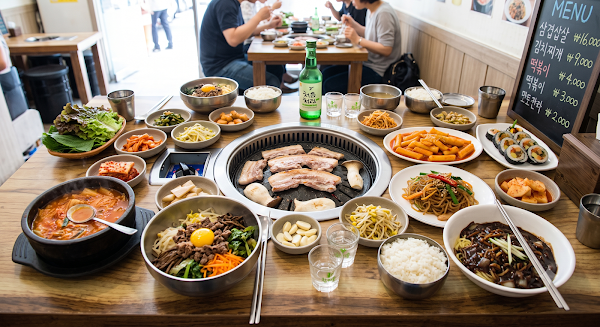
This Korean food guide is built for first-timers: 20 dishes you should eat on your very first trip to Korea, with spice levels, rough prices, and exactly where to find each one. No prior knowledge of Korean cuisine needed — just an appetite and this list.
Quick summary
- The 20 essential Korean dishes every first-time visitor should try in 2026.
- Each dish is rated by spice level and typical price so there are no surprises.
- A single at-a-glance comparison table covers all 20 dishes for fast planning.
- Includes ordering tips, plus vegetarian and halal notes for restricted diets.
How to Use This Korean Food Guide
Korea's food scene can feel overwhelming on day one, so this Korean food guide groups the 20 dishes into five easy categories: grilled meats, stews and soups, rice and noodles, street food, and drinks and dessert. For each dish you'll see roughly how spicy it is and what it usually costs, so you can plan meals around both your budget and your spice tolerance.
Two quick keys before you dig in:
- Spice scale: 0 = not spicy, 1 = mild, 2 = medium, 3 = seriously hot.
- Prices are 2026 estimates per person in Korean won (₩), based on casual restaurants in Seoul. Touristy areas run higher; local neighborhoods run cheaper.
Korean BBQ: The Meats You Can't Skip
Korean barbecue often involves cooking meat at the table and eating it with wraps and side dishes. Check portion sizes, minimum orders and refill charges with the restaurant.
Samgyeopsal — thick, unseasoned pork belly grilled at your table. The gateway dish for most first-timers. Spice: 0. About ₩13,000–18,000.
Bulgogi — thin beef marinated in a sweet-savory soy sauce, mild and crowd-pleasing. Spice: 0. About ₩12,000–16,000.
Galbi — marinated beef or pork short ribs, richer and slightly sweet. A step up from bulgogi. Spice: 0. About ₩18,000–28,000.
Dakgalbi — stir-fried chicken with cabbage, rice cake and gochujang, often cooked at your table on a big pan. Spice: 2. About ₩12,000–15,000.
Korean Stews & Soups for Every Weather
Hot, bubbling stews (jjigae) arrive at your table still boiling. They're comforting, affordable, and almost always come with rice.
Kimchi jjigae — a tangy, spicy stew of aged kimchi with pork or tuna. The most iconic everyday Korean meal. Spice: 2. About ₩8,000–10,000.
Sundubu jjigae — silky soft-tofu stew with seafood or beef and a cracked egg on top. Adjustable spice; ask for mild. Spice: 1–2. About ₩8,000–10,000.
Samgyetang — a whole young chicken stuffed with rice, ginseng and garlic in a clean broth. Not spicy at all; great for anyone easing in. Spice: 0. About ₩16,000–20,000.
Rice & Noodle Dishes
These are the reliable, easy-to-love plates you'll return to again and again during your trip.
Bibimbap — a bowl of rice topped with vegetables, egg and beef; mix it all with gochujang. You control the spice by how much sauce you add. Spice: 0–2. About ₩9,000–12,000.
Japchae — springy sweet-potato glass noodles stir-fried with vegetables and a touch of soy. Sweet, savory, not spicy. Spice: 0. About ₩8,000–12,000.
Jjajangmyeon: noodles with a dark bean-based sauce, often containing pork. Check ingredients and allergies rather than treating it as a universally safe choice for children.
Naengmyeon — chilled buckwheat noodles in an icy broth, perfect in summer. Order mul-naengmyeon for the mild broth version. Spice: 0–1. About ₩10,000–13,000.
Gimbap — seaweed rice rolls filled with vegetables, egg and meat. Cheap, portable, and everywhere. Spice: 0. About ₩3,500–5,000.
Korean Street Food & Snacks
Markets like Gwangjang and Myeongdong turn eating into entertainment. Bring cash and graze slowly.
Tteokbokki — chewy rice cakes in a sweet-spicy red sauce, the queen of Korean street food. Spice: 2–3. About ₩3,000–5,000.
Korean fried chicken — extra-crispy chicken, often glazed in soy-garlic or sweet-spicy sauce; pair it with beer for the classic "chimaek." Spice: 0–2. About ₩18,000–22,000 (whole).
Haemul pajeon — a crispy scallion-and-seafood pancake, best on a rainy day with makgeolli. Spice: 0. About ₩12,000–16,000.
Hotteok — a griddled sweet pancake oozing brown sugar, cinnamon and nuts. A winter street favorite. Spice: 0. About ₩1,500–3,000.
Bungeoppang — a fish-shaped pastry filled with sweet red-bean paste, sold from carts in colder months. Spice: 0. About ₩1,000–2,000.
Drinks, Dessert & Convenience-Store Eats
No Korea trip is complete without a late-night convenience-store run and something sweet.
Patbingsu — a mountain of shaved ice topped with red bean, fruit and condensed milk; shareable and refreshing. Spice: 0. About ₩8,000–15,000.
Convenience-store ramyeon — grab a cup at CU or GS25 and cook it at the in-store machine; a rite of passage. Spice: 2–3. About ₩1,500–3,000.
Soju & makgeolli — soju is a clean, neutral spirit; makgeolli is a milky, lightly sweet rice wine. Both are cheap and social. Spice: 0. About ₩2,000–5,000.
All 20 Dishes at a Glance
Save or screenshot this table — it's the fastest way to decide what to eat next.
| Dish | Category | Spice (0–3) | Approx. price (₩) | Where to try |
|---|---|---|---|---|
| Samgyeopsal | BBQ | 0 | 13,000–18,000 | BBQ restaurants |
| Bulgogi | BBQ | 0 | 12,000–16,000 | BBQ & Korean diners |
| Galbi | BBQ | 0 | 18,000–28,000 | BBQ restaurants |
| Dakgalbi | BBQ | 2 | 12,000–15,000 | Dakgalbi specialists |
| Kimchi jjigae | Stew | 2 | 8,000–10,000 | Everyday diners |
| Sundubu jjigae | Stew | 1–2 | 8,000–10,000 | Tofu-house chains |
| Samgyetang | Soup | 0 | 16,000–20,000 | Specialty soup houses |
| Bibimbap | Rice | 0–2 | 9,000–12,000 | Everywhere |
| Japchae | Noodle | 0 | 8,000–12,000 | Korean diners |
| Jjajangmyeon | Noodle | 0 | 7,000–9,000 | Chinese-Korean spots |
| Naengmyeon | Noodle | 0–1 | 10,000–13,000 | Noodle houses |
| Gimbap | Rice | 0 | 3,500–5,000 | Gimbap chains |
| Tteokbokki | Street | 2–3 | 3,000–5,000 | Markets & stalls |
| Korean fried chicken | Street | 0–2 | 18,000–22,000 | Chicken & beer pubs |
| Haemul pajeon | Street | 0 | 12,000–16,000 | Markets & pubs |
| Hotteok | Street | 0 | 1,500–3,000 | Street carts |
| Bungeoppang | Street | 0 | 1,000–2,000 | Winter street carts |
| Patbingsu | Dessert | 0 | 8,000–15,000 | Cafes & dessert shops |
| Convenience ramyeon | Snack | 2–3 | 1,500–3,000 | CU / GS25 / 7-Eleven |
| Soju & makgeolli | Drink | 0 | 2,000–5,000 | Pubs & convenience stores |
Ordering Tips for First-Timers
A few habits make eating in Korea smoother from the very first meal:
Side dishes are commonly included. Ask which refills are free; special sides and additional portions can carry charges.
Many places have a call button or QR menu. Press the table button or scan the code to order; larger restaurants in tourist areas usually offer English menus — just ask "English menu, please?"
Start mild, then build up. If you're unsure about spice, begin with samgyeopsal, bibimbap or samgyetang before tackling tteokbokki or kimchi jjigae.
Is Korean Food Vegetarian or Halal-Friendly?
Vegetable dishes may still contain fish sauce, anchovy broth or meat. Check ingredients and preparation with staff. For halal needs, use our halal planning guide; a cuisine or neighbourhood does not certify a dish.
Final Bites: Your Korea Food Bucket List
You won't fit all 20 dishes into a short trip, so prioritize like this:
- Must-eat on day one: Samgyeopsal (Korean BBQ) and tteokbokki from a market stall.
- Best comfort meals: Kimchi jjigae, bibimbap and jjajangmyeon — cheap, filling, everywhere.
- Don't leave without: Korean fried chicken with beer, and a hotteok or patbingsu for dessert.
- Budget tip: Convenience-store meals and gimbap keep daily food costs low between big meals.
Once you've picked your dishes, plan where to eat them with our Ultimate 7-Day Seoul Itinerary, check the Best Time to Visit Korea for seasonal street foods, and see what edible souvenirs to bring home in What to Buy in Korea.
Frequently Asked Questions
What Korean food should I try first as a beginner?
Start with samgyeopsal (Korean BBQ pork belly), bibimbap and bulgogi. All three are mild, widely available, and easy to enjoy without any spice tolerance, making them the ideal first meals in Korea.
Is Korean food very spicy?
Not all of it. Many staples like bulgogi, japchae, jjajangmyeon and samgyetang have no chili at all. Spicy dishes such as tteokbokki and kimchi jjigae rate 2–3 on our scale, but you can usually ask for a milder version.
How much does a typical Korean meal cost in 2026?
A casual sit-down meal in Seoul runs about ₩8,000–15,000 per person, while street food and convenience-store meals cost ₩1,500–5,000. Korean BBQ and fried chicken are pricier at roughly ₩18,000–28,000 per person.
What can I eat in Korea if I don't eat pork or I'm vegetarian?
Ask about stock, sauces, meat, seafood and shared preparation. Removing a visible meat topping does not necessarily make a dish vegetarian or halal. A dish name alone cannot establish suitability.
Do Korean restaurants have English menus?
Restaurants in tourist areas like Myeongdong, Hongdae and Insadong usually offer English menus or picture menus, and many now use QR-code ordering with a language option. In local neighborhoods, a translation app helps a lot.
Where is the best place to try authentic Korean street food in Seoul?
Gwangjang Market and Myeongdong are the two most beginner-friendly spots, offering tteokbokki, gimbap, hotteok and more in one place. Both are easy to reach by subway and best visited hungry in the late afternoon or evening.