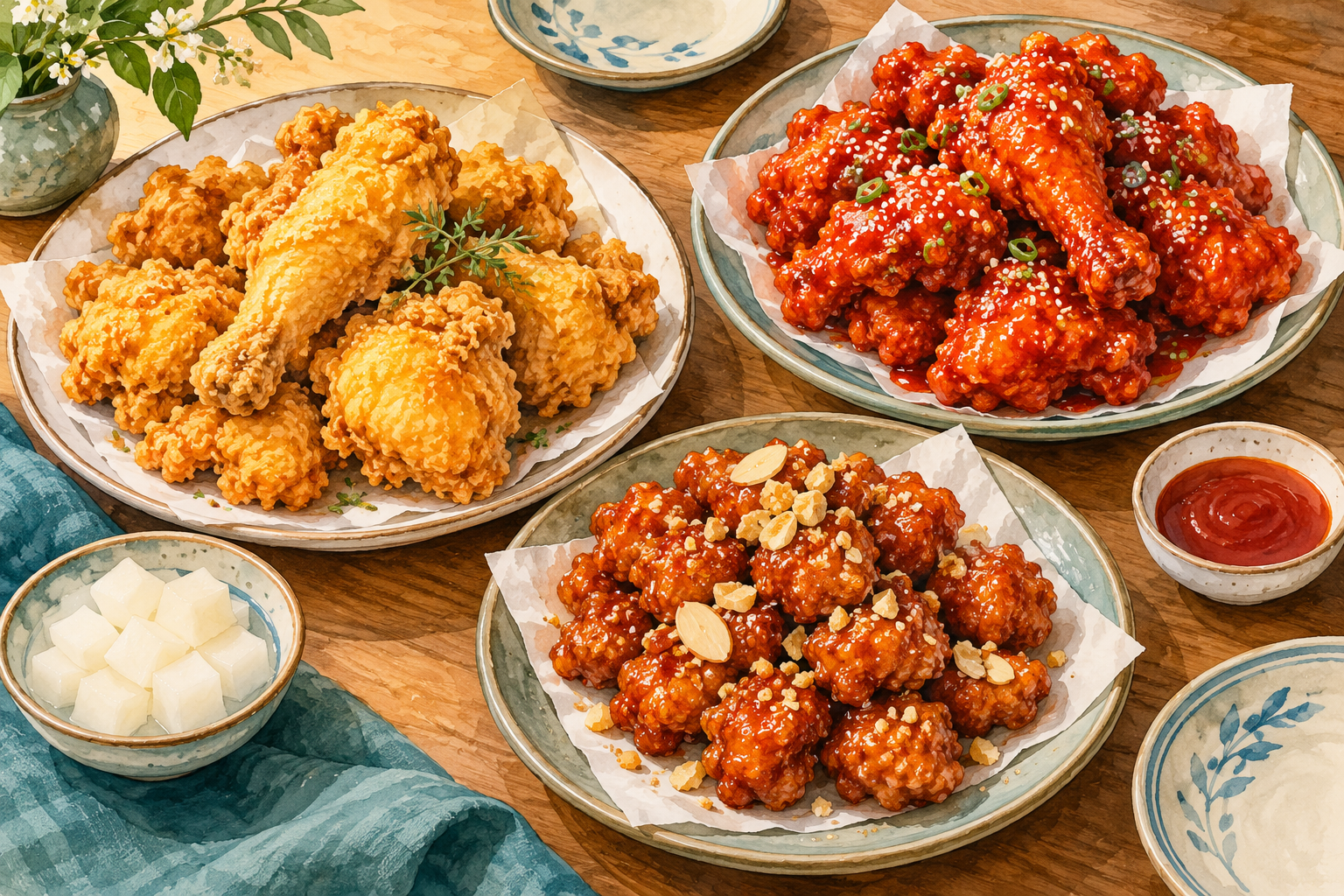
Choose by coating and sauce, not nationality
Quick answer: Choose plain fried chicken for a crisp, sauce-free starting point, yangnyeom for a glossy sweet-spicy coating, or dakgangjeong for glazed bite-size pieces that may include nuts. Then confirm bones, portion size and ingredients with the restaurant.
This guide does not assume that visitors from one country share a taste. Start with the heat, sweetness, texture and aroma you already enjoy. Korea Tourism Organization descriptions provide typical directions, not a recipe followed by every shop.
For a wider first-meal framework, read our Korean food guide by taste and texture. For seating, portions and payment, use the eating-alone and ordering guide.
Compare three menu directions before ordering
Fried chicken, yangnyeom chicken and dakgangjeong can look similar in a menu photo, but the sauce and serving style create different choices.
| Menu direction | What usually stands out | Ask before ordering |
|---|---|---|
| Fried · 후라이드 | Crisp coating without an all-over sauce | Bone-in or boneless, portion and dipping sauce |
| Yangnyeom · 양념 | Sweet and spicy red sauce coating the chicken | Heat level and whether sauce can be separate |
| Dakgangjeong · 닭강정 | Glazed bite-size chicken, often sweet-spicy or sweet soy | Nut garnish, bones, sauce and portion |
KTO describes Korean fried chicken as flour-coated and deep-fried, with seasoned chicken and green-onion chicken among popular versions. Its dakgangjeong entry describes boneless fried chicken glazed with sweet-spicy red chili paste sauce or sweet soy sauce and topped with crushed nuts including peanuts. That entry is useful background, not proof that every shop’s dakgangjeong is boneless or contains the same garnish.
Start with plain fried chicken for sauce control
Plain fried chicken is the clearest option when you want crisp coating and prefer to judge sauces separately.
“Plain” does not mean allergen-free, unseasoned or mild in every restaurant. The coating may contain wheat, and marinades or seasoning powders can contain ingredients not visible after frying. Ask whether a dipping sauce or seasoning powder is included and whether it can be served separately.
Confirm bone-in versus boneless instead of relying on an English photo caption. A whole or half-chicken label may describe the selling portion rather than the exact pieces you expect.
Choose yangnyeom when a coated sweet-spicy flavor appeals
Yangnyeom chicken is the sauce-forward choice, commonly presented with a red sweet-spicy coating.
Red color does not establish one heat level. Ask the shop whether its sauce is mild, medium or hot, but remember that those words are relative. If you are unsure, ask whether sauce can be ordered separately; the kitchen may not offer that option for every menu.
양념은 많이 매운가요? means “Is the yangnyeom very spicy?” and 소스를 따로 주실 수 있나요? means “Could you serve the sauce separately?” These phrases express a preference, not an allergy warning.
Choose dakgangjeong for glazed bite-size pieces
Dakgangjeong is a useful choice when you want bite-size glazed chicken, but check the garnish and bones instead of treating the name as a safety guarantee.
KTO’s typical description includes crushed nuts such as peanuts. Shops can use different nuts, seeds or no visible garnish, and removing pieces from the top does not address sauce ingredients or kitchen cross-contact. Sweet soy versions may still contain wheat through soy sauce; “boneless” does not establish halal certification or a dedicated preparation area.
Dakgangjeong is also sold at traditional markets, where takeaway portions and reheating expectations differ from dine-in fried-chicken shops. Ask how much one box contains rather than assuming the display tray is one order.
Use half-and-half only after naming both sides
“Half-and-half” or 반반 is a format, not a universal pair of flavors.
A common request may combine plain fried and yangnyeom chicken, but the restaurant decides which combinations, sizes and surcharges it offers. Point to both exact menu names and confirm whether the order is bone-in or boneless. Do not assume two half portions cost the same as one single-flavor order.
- 후라이드와 양념 반반 돼요? — Can I get half fried and half yangnyeom?
- 뼈 있는 치킨인가요? — Is it bone-in chicken?
- 한 마리는 몇 명이 먹기 좋아요? — About how many people is one order suitable for?
Serving estimates are the restaurant’s guidance, not a fixed national portion rule.
Check ingredients and cross-contact separately
For an allergy, prescribed diet or religious requirement, confirm the chicken, marinade, coating, sauce, garnish and shared fryer as separate questions.
Possible concerns can include wheat, soy, egg, milk, peanuts, other nuts or sesame, but this is not a complete list and none is guaranteed to be present or absent. A shop may use the same fryer, tongs or preparation surface across products. If staff cannot provide the information required by your medical plan, choose another meal.
Use our food-allergy checklist for a structured conversation. For religious dietary planning, see the Seoul halal-food category guide. Chicken meat alone does not establish halal certification.
Korean chicken ordering questions
These answers separate common menu language from restaurant-specific facts.
Is yangnyeom always very spicy?
No. Sweetness and heat vary by recipe. Ask about the shop’s current sauce rather than judging only by color.
Is dakgangjeong always boneless?
KTO’s typical description uses boneless meat, but confirm the product in front of you. A general dish description is not the restaurant’s ingredient statement.
Does banban always mean fried plus yangnyeom?
No. It means half-and-half. Name both flavors and confirm size, bones and any surcharge.
Is plain fried chicken gluten-free?
Do not assume so. Check coating, marinade, seasonings, sauces and shared preparation.
Can I order chicken while dining alone?
Yes if the shop accepts the order, but portions and minimum orders vary. Ask about a smaller option or takeaway without assuming one is available.
Checked on 22 October 2026. No restaurant visit or tasting is claimed. This independent food guide does not certify ingredients, allergen controls, religious compliance, price, serving size or availability.
Want to try chicken delivery?
Use our tourist food-delivery guide to check English ordering, foreign cards, your address and the hotel pickup process before paying.